Lake Simcoe Protection Plan

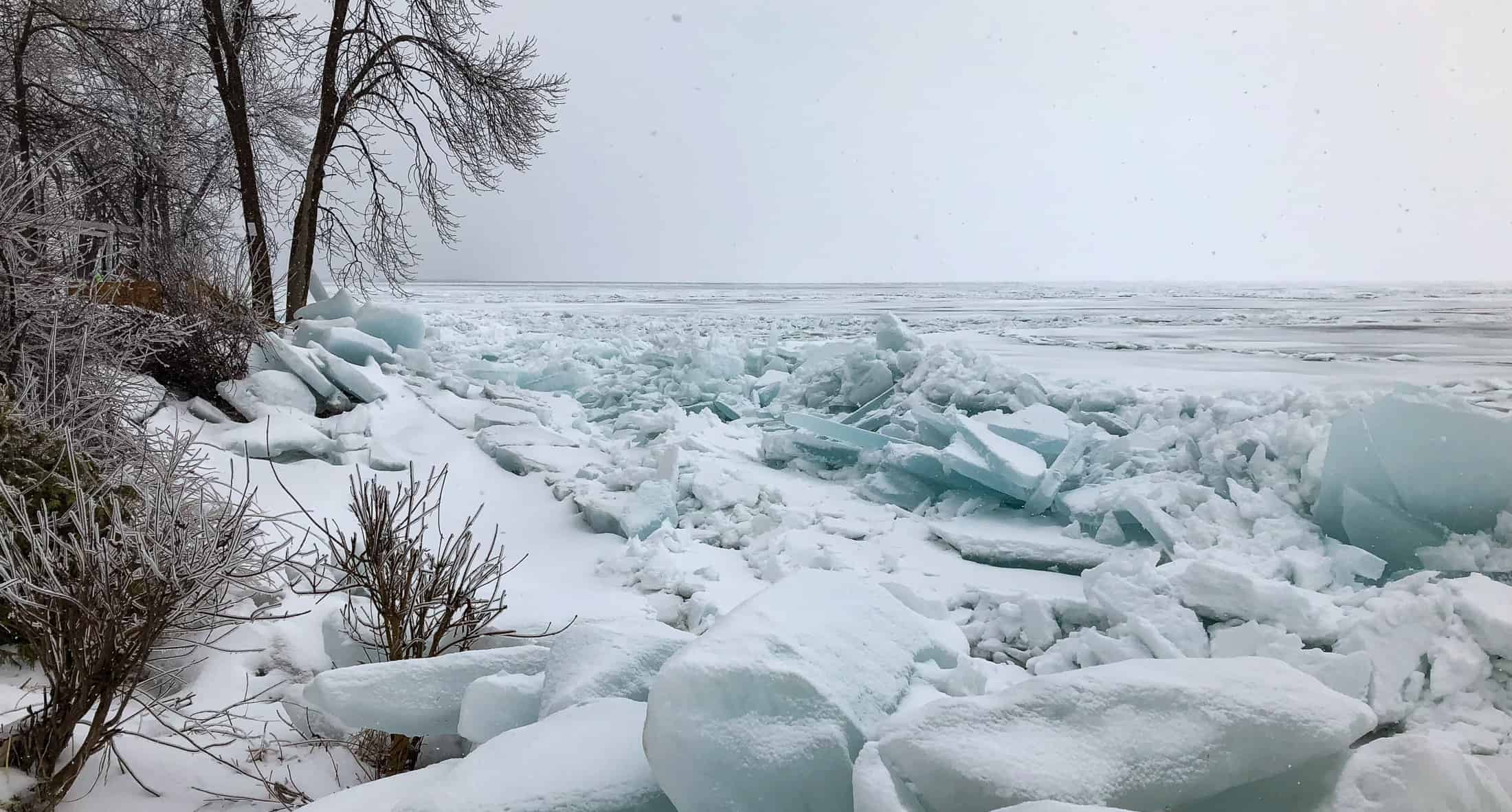
Lake Simcoe ice

The Made in Ontario Environment Plan commits the province to: “Build on previous successes and continue to implement the Lake Simcoe Protection Plan to protect and restore important natural areas and features of the lake.” It is the Christmas wish of the 28 signatory groups to this letter that you honour that promise.
In early 2019, the year the statutory review of the Lake Simcoe Protection Plan was to commence, the Rescue Lake Simcoe Coalition launched the Protect Our Plan (POP) campaign, promoting the importance of the Lake Simcoe Protection Plan. The Province hosted a survey, an online consultation and an online science forum in early 2020. The list of extensive consultation, education, and engagement conducted by the Rescue Lake Simcoe Coalition is available at Rescue Lake Simcoe.

Value for Money Audit: Land-Use Planning in the Greater Golden Horseshoe

Greater Golden Horseshoe Map

Ministers’ Zoning Orders (MZOs) are being used to fast track development, overriding provincial and municipal plans which have taken years of technical studies and public consultation to complete, said Auditor General Bonnie Lysyk in her 2021 Annual Report. In the two-year period from March 2019 to March 2021, 44 MZOs were issued. Prior to this, MZOs were issued about once a year. In addition, all MZOs are no longer required to be consistent with provincial land-use policy.

“The willingness of the province to make decisions that do not align with municipal plans has upended the certainty that both the municipal and development communities need,” said Lysyk. “Municipal land-use plans and the infrastructure required to support these decisions can take years to design, fund and consult with the community. The rationale behind the increased use of MZOs should be transparent to the public.”

Help stop the 413

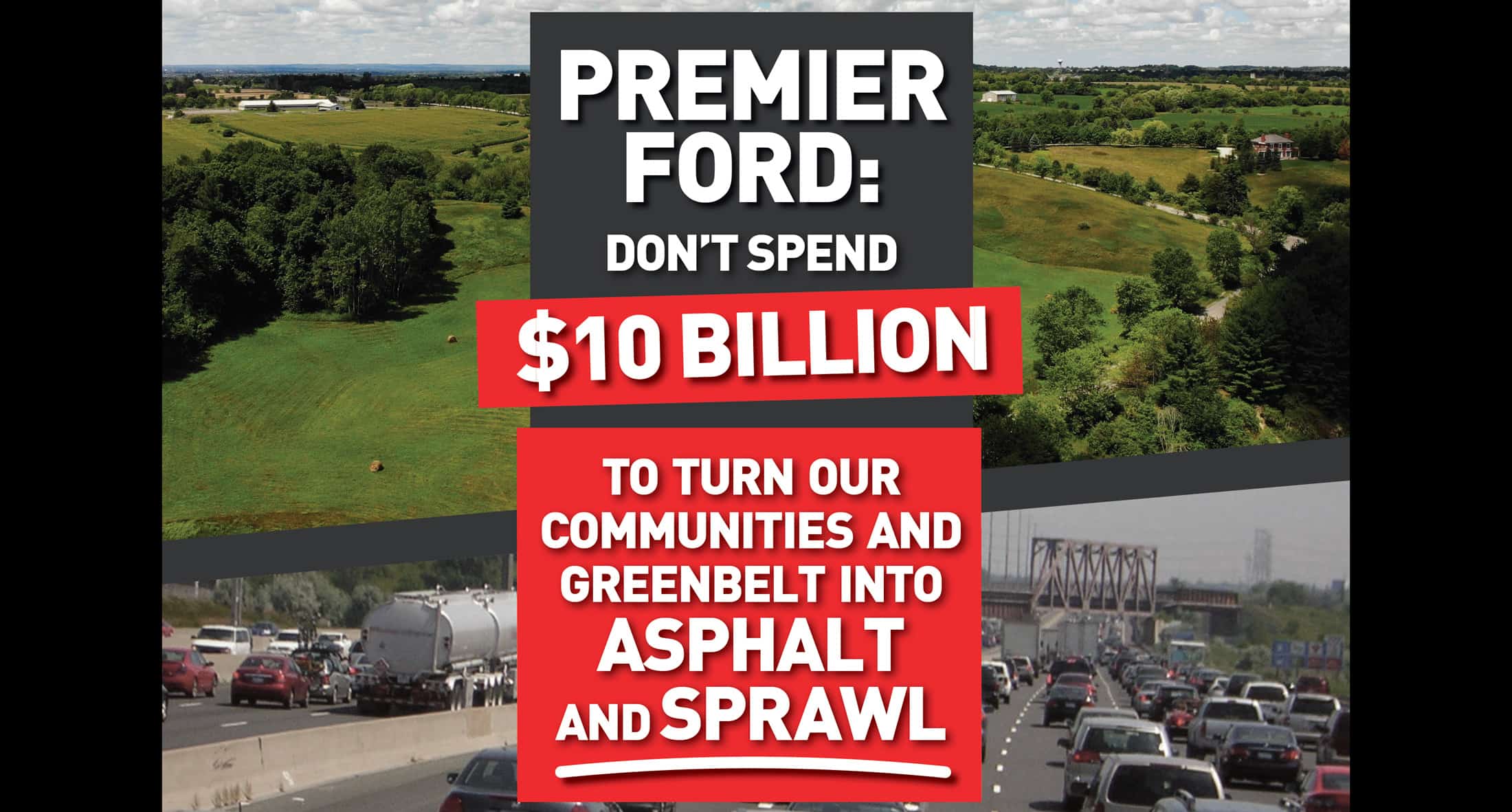
Premier Ford: Don't spend $10 Billion

In the December 12 edition of the Toronto Star 100+ groups – from community organizations to health groups to farmers – sent Premier Ford a strong message: Don’t destroy Greenbelt lands! Cancel Highway 413 & the Bradford Bypass.

Highway 413 will destroy over 2,000 acres of prime farmland including 400 acres of the Greenbelt. It will cross 85 rivers and streams and will spew over 17 million tonnes of greenhouse gases by 2050.

The Bradford Bypass will destroy a section of the provincially significant forested Holland Marsh Wetland in the Greenbelt.

It will pave over the home of several endangered species, add more salt and oil pollution to Lake Simcoe, and contaminate private wells.

New Planning and Growth Division, Ministry of Municipal Affairs and Housing

London, Ontario

Kate Manson-Smith, the Deputy Minister of the Ministry of Municipal Affairs and Housing has announced changes to the organizational structure of the Ministry as of September 20, 2021.

“The work of the Ontario Growth Secretariat (OGS) will be integrated into other parts of the ministry and a new Planning and Growth Division (PGD) will be created that integrates policy portfolios related to provincial, regional and municipal lan d use planning as well as buildings and construction.  This realignment will integrate key land use and development related policy functions into a single division which will result in a clearer mandate and enhanced stakeholder relationships.  Bringing together the entire growth, land use planning and buildngs policy continuum will result in better alignment and allow us to work together in a more effective manner.”

Foundry Update – demolition stopped

Dominion Foundry

The City of Toronto and the Province have come to an agreement regarding the fate of the Foundry site on Eastern Ave. The main details of that agreement are outlined in a new Heritage Impact Assessment, made public on August 20, 2021.

The key points are:

  • The Machine Shop and Foundry Building (a.k.a. the Cleaning Building) will not be demolished
  • The Office Building and the Warehouse will be demolished
  • When the property is sold, conditions of sale will constrain the purchaser to protect the two heritage buildings
  • The percentage of affordable housing to be built on site has been increased from 25% to 30%

Greater Golden Horseshoe Transportation Plan Consultation

Greater Golden Horseshoe roads

This is the response of the Federation of Urban Neighbourhoods (Ontario) to the discussion paper re: the 2051 Greater Golden Horseshoe (GGH) Transportation Plan. According to the paper a 2051 GGH transportation plan will help:

  • Prepare the transportation system to serve an expanding economy and population. By 2051, population and employment are forecasted to grow from 10 million to 14.9 million people, and 4.5 million to 7 million jobs, respectively.
  • Identify necessary actions to address mobility and congestion in the GGH.
  • Guide and support Ontario’s transportation investment decisions.
  • Coordinate strategic planning across the region for the next 30 years.
  • Prepare for new technology and changes, “like automated vehicles and mobility as a service platform that could change the way we move around the region.”

NO MORE HIGHWAYS Day of Action – July 24

No More Highways Day of Action - July 24, 2021

The Ontario government is planning two new highways through Ontario’s precious farmland and Greenbelt – Highway 413 and the Holland Marsh Highway (Bradford Bypass).

If built, the highways would pave over farms, forests, wetlands and a portion of the Greenbelt and cost taxpayers upwards of $6-10 Billion. Highway 413 alone would also add over 17 million tonnes of greenhouse gas emissions by 2050, at a time when cutting emissions is more urgent than ever.

Enough is enough.We need to show the province that Ontarians do not want more megahighways, we want local produce, effective public transit and livable, walkable communities.

Ontario makes it easier for businesses to launch new bus routes

Northland Bus

TORONTO – The Ontario government is cutting red tape and making it easier for companies to provide passenger transportation services between communities in Ontario effective July 1, 2021. This is part of the province’s efforts to improve transportation options for Ontarians as the province recovers from the COVID-19 pandemic.

“Under the previous system it was difficult for businesses that offered bus service to begin operating on a new route, even in situations where there was no service being offered,” said Caroline Mulroney, Minister of Transportation. “By cutting red tape, we are making it easier for carriers to offer transportation services to communities where there is a need.”

Province seeks input on Transportation Vision

GO Train

TORONTO – Today, the Ontario government released a discussion paper for public feedback that will inform the province’s first transportation plan for the Greater Golden Horseshoe. Ontario is building a better transportation system to connect communities and keep goods and people moving across the province, including in Ontario’s economic engine, the Greater Golden Horseshoe.

“We have a long-term vision for the Greater Golden Horseshoe that takes us to 2051, built on connected transportation that’s safe, seamless and accessible,” said Caroline Mulroney, Minister of Transportation. “This discussion paper is an important opportunity to gain further insights that will help shape a better transportation network for our province’s future.”

Through a consultation posting on the Environmental Registry of Ontario as well as an online feedback form, the Ontario government is seeking public input on ways to achieve our vision.

Conservation Authorities – Regulatory Proposals Phase 1

Path through the woods

We strongly support the combined submission of CELA, Ontario Nature, Environmental Defence, and WCS Canada in regard to this matter who:

“strongly encourage the Ministry of Environment, Conservation and Parks to ensure that any proposed regulations do not hamper or limit the ability of Conservation Authorities (CAs) to develop and deliver watershed‐wide programs and services aimed at achieving a healthy and climate resilient Ontario. CAs should determine programs and services with local partners, based on community needs and priorities, rather than creating a rigid division between mandatory and non‐mandatory programs and services. Further, it is crucial that a stable funding model be developed that enables CAs to fully realize their legislative purpose, which is “… to provide for the organization and delivery of programs and services that further the conservation, restoration, development and management of natural resources in watersheds in Ontario.”