2021 Budget Consultations

Money

FUN recognizes the significant fiscal challenges facing the Government of Ontario, especially in light of the current and continuing Pandemic. We also believe that investing in and maintaining physical, social and health infrastructure, all the while addressing the Climate Emergency are critical to the future well-being of all Ontario residents. And protecting green space improves mental and physical health, and moderates future health care and long term care costs.

Recognizing this, our organization offers the following recommendations for inclusion in the 2021 Ontario Budget.

Urban Infrastructure:

High functioning infrastructure is a key requirement to attracting and keeping businesses in Ontario. The provincial government should provide increased funding and support for urban municipalities to maintain and enhance their facilities, with an emphasis on “green” infrastructure.

The Ministry of the Environment, Conservation and Parks Needs to Lead by Example When It Comes to Protecting Ontario’s Environment: Auditor General

Algonquin Park

The Ministry of the Environment, Conservation and Parks needs to do more in leading by example on the environmental front by supporting, promoting and administering the Environmental Bill of Rights (EBR Act) in a more fulsome manner, concluded Auditor General Bonnie Lysyk in her 2020 Annual Report of Environmental Value-for-Money Audits and the Operation of the Environmental Bill of Rights.

The report found examples by multiple government ministries of non-compliance with their responsibilities under the EBR Act that prevented its effective operation in 2019/20. The report states some ministries are still not posting environmentally significant proposals on the Environmental Registry or giving the public enough time to respond when they do.

FUN response to request for comments on MZO implementation

Construction - Toronto

The Ontario government can now extend its control beyond the matter of site specific zoning permission to all site details. Yet the government has not provided a principled rationale for why it has done so. Planning is the responsibility of municipalities within the framework of broad Provincial policies to allow municipalities the flexibility to deal with their issues and priorities.

The overriding question is why and when should MZOs be used in the first place. This government is using MZOs far more often than any government in the past. By making over 30 MZOs since its election in 2018, the current government appears to have decided that municipalities cannot be trusted to implement provincial priorities such as “affordable housing, long term care homes and other health care facilities”, and that the government feels it necessary to make decisions unilaterally and override the due process (including community participation) of local planning by municipalities. MZOs do not require community consultations, or to require the provision of any community benefits.

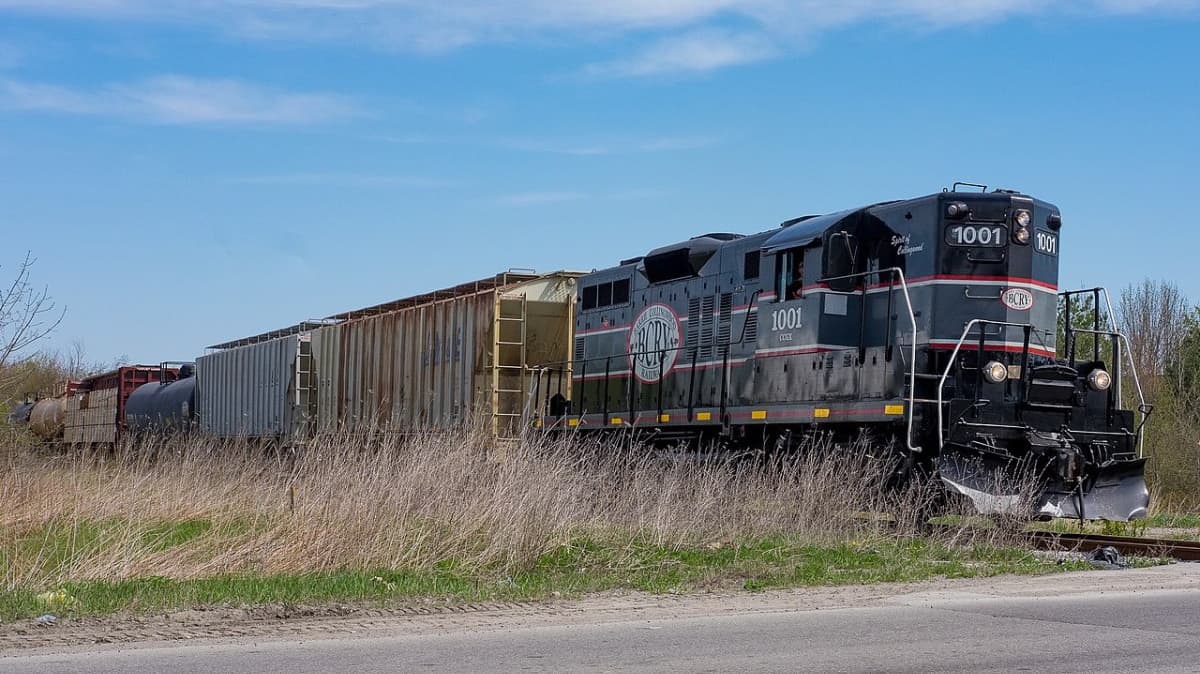
Ontario short-lines under threat

Barrie Collingwood Railway

There has been lots of Ontario short-line railway news in the past few weeks. Most importantly, the Huron Central Railway has received 6 months temporary funding to June, 2021 to allow governments more time to negotiate capital funding.

Meanwhile, CN has announced it is putting the Algoma Central Railway up for sale, although few details have been provided. The Town of Orangeville has announced the pending closure of the Orangeville-Brampton Railway in December, 2021. This line currently serves many local industries, supporting hundreds of jobs. The section of this line linking Brampton and Streetsville also has potential for future rail transit use and Transport Action Ontario will be urging Metrolinx to acquire the line. Read our letter. The Barrie-Collingwood line is also in danger of abandonment and removal. Transport Action Ontario has written to local stakeholders pointing out the benefits of continued operation.

Draft Northern Ontario Transportation Plan released

Highway 129 Ontario

The Ontario Ministry of Transportation released Connecting the North: A draft transportation plan for Northern Ontario on December 10, 2020.  Transport Action Ontario has reviewed it in detail. Transportation Action believes that it is too highway-centric and needs more emphasis on passenger and rail freight.

In particular, it provides no concrete timeline for fulfilling the government’s promise to restore passenger rail service between Toronto, North Bay and Cochrane.  

Read Transportation Action’s full review

Public inquiry recommends conflict-of-interest overhaul for municipal councillors 

man writing

The results of a two-year inquiry requested by Collingwoods’ Town Council after an Ontario Provincial Police investigation into the partial sell-off of Collingwood’s electrical utility and alleged improprieties in how the proceeds were used to construct recreational facilities are in!

All Ontario municipalities require a better ethical infrastructure.

The Federation or Urban Neighbourhoods sent a Submission to the Government of Ontario on Nov 18, 2020 supporting the recommended amendments to the Municipal Conflict of Interest Act, urging the Ontario Government to act on these recommendations to protect the citizens of Ontario.

Conflict of interest overhaul recommended

Conflict of Interest

The results of a two-year inquiry requested by Collingwoods’ Town Council after an Ontario Provincial Police investigation into the partial sell-off of Collingwood’s electrical utility and alleged improprieties in how the proceeds were used to construct recreational facilities are in!

Frank Marrocco, Associate Chief Justice of the Superior Court of Ontario, just released his report – Report of the Collingwood Judicial Inquiry, Transparency and the Public Trust.

The Executive Summary states “undisclosed conflicts of interest marred many of the decisions made in respect to these two transactions, as did a series of unfair and precarious procurement practices. Combined, these factors left the transactions vulnerable to improper influence and cast doubt on both their legitimacy and the Town’s reputation.”

Dominion Foundry – Stop the demolition!

Dominion Foundry

The Dominion Foundry complex in the West Don Lands, a listed heritage site, is in imminent danger of demolition. We need your help to pressure the Province to stop the demolition and start talking about adaptive reuse of at least part of the site.

On January 14, a demolition crew arrived at the site to raze the Foundry buildings. Because these are provincial lands, no demolition permit was required and no notice was given to the City, the community or to heritage advocates. 

To add insult to injury, the Ministry of Municipal Affairs and Housing chose the first day of the emergency provincial lockdown to quietly move in demolition equipment.

Protecting Ontario’s Environmental Future

Woodland

Over 1200 people joined Environmental Defence’s live online discussion on January 12, to listen to Tim Gray, with special guests David Crombie, Anastasia Lintner and Anne Bell discuss Ontario’s environmental future.

If you missed the live discussion, it was recorded and is now available to watch on YouTube.

Ontario Cities Considering Tax on Vacant Homes

Boarded up house

Toronto City Council has approved an implementation plan to introduce a new tax on vacant Toronto homes starting in 2022. Ottawa City Council has asked staff to study whether such a tax would work in Ottawa.

The goal is not to increase revenue, but to increase the housing supply, by encouraging homeowners to sell or rent their unoccupied home. If they choose to continue to keep the home vacant (or boarded up), a tax is levied. This revenue can then be used to fund affordable housing projects.